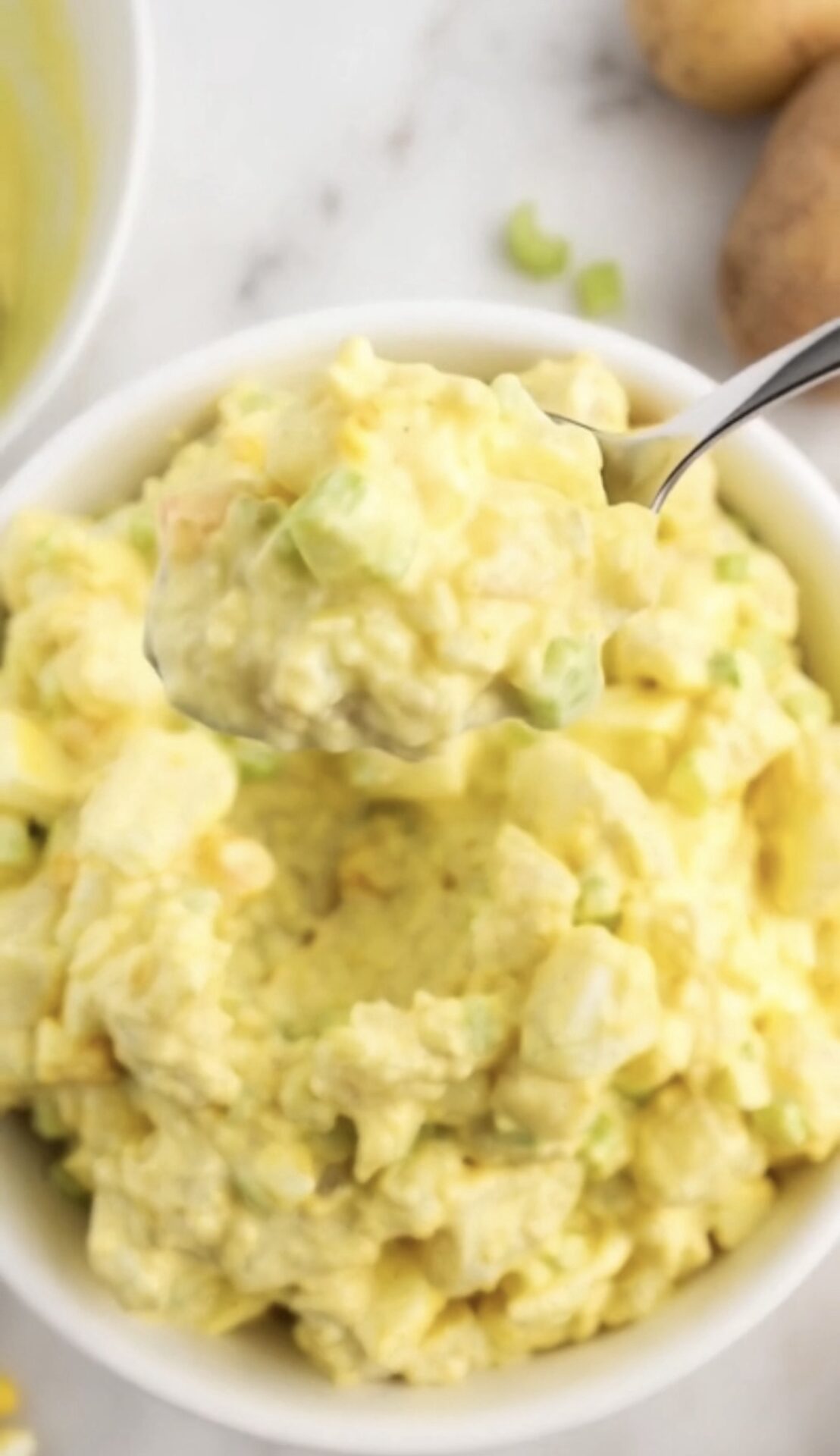
Sweet or savory? Relish or no relish? Amish, Southern or Midwestern? Everyone seems to have an opinion about what belongs in potato salad.
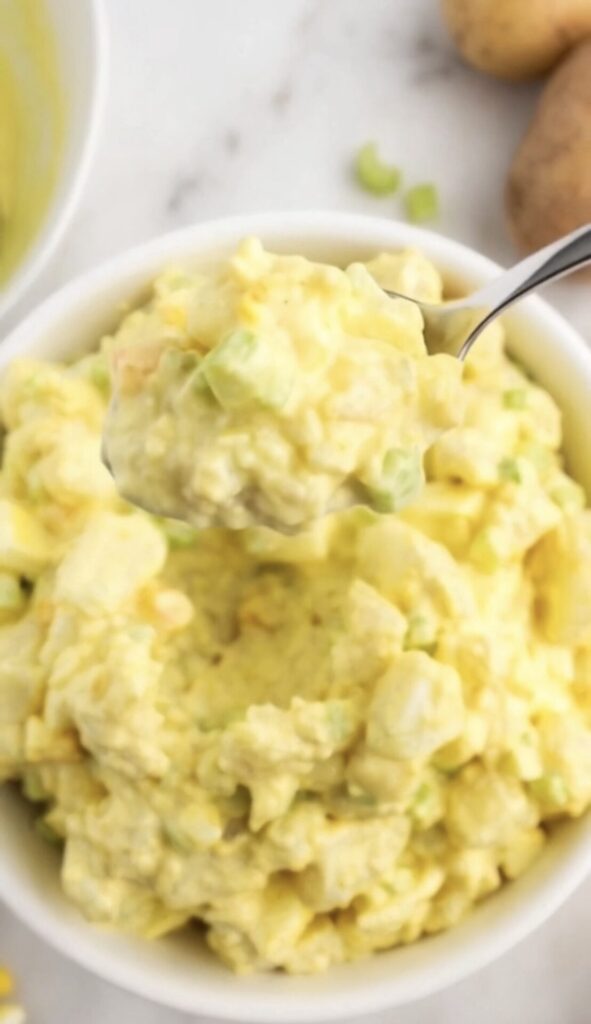
If you grew up in the Midwest, potato salad is one of those foods that has always been around. Church potlucks were never the same without it, and usually macaroni salad and coleslaw were sitting right beside it. The same was true at family reunions, graduation parties, picnics and summer cookouts. Potato salad was simply part of the table.
If you’re just finding Shannon’s in the Kitchen, welcome. I love sharing the recipes many of us grew up with — vintage and retro favorites, Midwestern classics, old-fashioned potluck recipes and easy dishes that are still worth making today. Some are recipes I grew up with, and others are classics I come across that make me want to know a little more about where they came from.
I came across this recipe while researching traditional Amish recipes, and what caught my attention was how close it is to the potato salad I make at home — especially the dressing. That got me wondering: if so many of these ingredients are familiar to the potato salad many of us grew up with, why do we call this one Amish Potato Salad?
Turns out, there really are some differences, and much of it comes down to that sweeter, tangier dressing. But once I started looking into the history, I realized there’s a lot more behind that bowl of potato salad than I expected.
Why Is It Called Amish Potato Salad?
There isn’t one official Amish potato salad recipe that every Amish family makes exactly the same way. Family recipes vary just as they do everywhere else. But traditional Amish and Pennsylvania Dutch versions do share some recognizable characteristics.
The biggest difference is usually the dressing. Amish-style potato salad tends to be sweeter than many other American potato salads, with sugar and vinegar creating that distinctive sweet-and-sour flavor. Yellow mustard and a creamy dressing such as mayonnaise are commonly part of the mix, and hard-boiled eggs, celery and onion show up frequently as well.
That’s exactly what caught my attention about this recipe. The dressing combines mayonnaise with ¼ cup of sugar, vinegar and yellow mustard, along with five hard-boiled eggs, celery and onion. It’s creamy, sweet and tangy without being complicated.
The sweet-and-sour combination also has deeper roots in Pennsylvania Dutch cooking. Sugar and vinegar have long been paired in dressings, salads and pickled foods in Pennsylvania German food traditions. Once you understand that, the sweeter dressing in Amish potato salad makes a lot more sense.
Amish and Pennsylvania Dutch: Are They the Same Thing?
Not exactly.
The Pennsylvania Dutch are part of a much broader Pennsylvania German cultural tradition that developed among German-speaking immigrants who settled in Pennsylvania and surrounding areas beginning in the 17th and 18th centuries. Despite the word “Dutch,” these communities were primarily German-speaking rather than Dutch in the modern sense.
The Amish are a distinct religious and cultural group within that larger Pennsylvania German history. That’s why many foods we casually call “Amish” today share ingredients, techniques and flavors with broader Pennsylvania Dutch cooking.
Potato salad is a good example. The familiar sweet-and-sour combination didn’t suddenly appear when someone decided to call a recipe Amish Potato Salad. It fits into a much older regional cooking tradition.
How Potato Salad Made Its Way to America
For something that seems completely at home next to hamburgers, barbecue and corn on the cob, potato salad has traveled a very long way.
Potatoes originated in the Andes of South America and eventually made their way to Europe. European cooks developed countless ways of preparing them, including early forms of potato salad. German immigrants later brought their own potato-salad traditions to the United States.
The Smithsonian’s National Museum of American History has even used potato salad as an example of how food travels between cultures: a South American vegetable became part of European cooking traditions and ultimately helped create a dish that became an American favorite.
Once potato salad reached American kitchens, it didn’t remain one single recipe. Families adapted it to their own tastes. Recipes traveled between neighbors and generations. Ingredients changed according to what was available and what people liked.
Eventually, potato salad became so thoroughly American that different regions developed their own recognizable versions.
The Great Potato Salad Debate: Amish, Southern, German or Midwestern?
This is where things get interesting, because there are no absolute rules. Families move, recipes travel and no entire region makes potato salad exactly the same way.
There are, however, some differences that show up often enough to notice.
Amish Potato Salad
Amish-style potato salad generally leans toward sweet, tangy and creamy.
Sugar and vinegar are important parts of the dressing, commonly accompanied by yellow mustard and mayonnaise or another creamy base. Hard-boiled eggs are common, as are celery and onion.
Some versions contain pickles or relish and others don’t. It’s really that balance between sweet and sour that distinguishes the style.
Southern Potato Salad
Southern potato salad is also generally creamy, but yellow mustard often plays a bigger role. Hard-boiled eggs are common, and sweet pickle relish or chopped sweet pickles frequently appear in Southern versions.
Some cooks add pickle juice, and paprika sprinkled over the finished salad is familiar, too.
Of course, ask families from different parts of the South how they make potato salad and you’ll get plenty of different answers. That’s part of what makes regional food so interesting.
Midwestern Potato Salad
Midwestern potato salad may be the hardest to define because the Midwest itself was shaped by so many different immigrant food traditions, including strong German and Scandinavian influences.
The cold, creamy potato salad many of us grew up with often includes potatoes, mayonnaise, eggs, mustard, celery and onion. From there, every family seems to have its own way of doing things.
Occasionally, I like to add a little relish to my potato salad — and to my tuna salad, too. I like the little bit of sweetness and tang it adds. This particular Amish Potato Salad doesn’t call for relish, and honestly, it doesn’t need it. The sugar, vinegar and mustard are already doing that job in the dressing.
You’ll find potato salads made with sweet relish, dill relish, chopped pickles or no pickles at all. It really comes down to what you like and, very often, what you grew up eating.
German Potato Salad
Then there’s German potato salad, which is quite different from the cold, creamy version we’re making here.
The version many Americans recognize is generally more vinegar-forward, often contains bacon and may be served warm. German potato salads themselves vary by region, but German-American cooking had an enormous influence on American potato-salad traditions, particularly in parts of the Midwest.
That helps explain why vinegar has remained such a natural partner for potatoes even in later creamy American versions.
Why Potato Salad Became a Potluck Classic
Potato salad was practically made for the way Americans have gathered for generations. Potatoes are affordable, they stretch to feed a crowd, and a big bowl can be prepared ahead of time.
That made potato salad a natural fit for church potlucks, family reunions, picnics, graduation parties and summer holidays. Macaroni salad and coleslaw became familiar neighbors on those tables for many of the same reasons.
And I think that’s part of why people have such strong opinions about potato salad. We’re not necessarily comparing recipes. We’re comparing memories.
The version that tastes “right” is often the one somebody in your family made.
Amish Potato Salad Recipe
This version is creamy, sweet and tangy, with plenty of hard-boiled egg and a little crunch from celery and onion. It’s also an easy make-ahead side dish for Labor Day weekend, a barbecue or any time you’re feeding a crowd.
Ingredients
- 3 lbs potatoes, peeled and cubed
- ½ cup celery, finely chopped
- 5 hard-boiled eggs, chopped
- ¼ cup white onion, finely diced
- 1 cup mayonnaise
- ¼ cup sugar
- 2 tbsp vinegar
- 2 tbsp yellow mustard
- 1 tsp salt
Directions
- Boil potatoes in salted water until just fork-tender, about 10–12 minutes. Drain and let cool completely.
- In a large bowl, whisk together mayonnaise, sugar, vinegar, mustard and salt until smooth.
- Add cooled potatoes, chopped eggs, celery and onion.
- Gently fold everything together until evenly coated.
- Cover and refrigerate for at least 2 hours.
- Serve chilled.
Shannon’s Shortcut
Make this the night before.
The recipe needs at least two hours in the refrigerator anyway, and giving it more time lets everything get cold and the flavors come together. If you’re cooking for a holiday or having people over, it’s also one less thing to make that day.
Want to Make It Lighter?
If you’re looking for a lighter option, here’s an easy one. Replace ½ cup of the mayonnaise with ½ cup plain Greek yogurt.
For the lighter dressing, use:
- ½ cup mayonnaise
- ½ cup plain Greek yogurt
- ¼ cup sugar
- 2 tbsp vinegar
- 2 tbsp yellow mustard
- 1 tsp salt
Mix the dressing exactly the same way, then fold in the potatoes, eggs, celery and onion.
You’ll still get the creamy texture and sweet-and-tangy flavor, just with a little less mayonnaise.
If You Love Pickles, Try Dill Pickle Potato Salad
Dill pickle potato salad takes things in another direction entirely.
Chopped dill pickles, fresh dill and a little pickle brine can turn a creamy potato salad into something much sharper and more pickle-forward. You can also use dill relish if that’s what you have on hand.
It’s different from this sweeter Amish version, but it’s another example of how one basic dish can change dramatically with just a few ingredients.
What to Serve With Amish Potato Salad
This is classic cookout food, so there’s no reason to overthink the rest of the menu. Serve it with barbecue ribs, hamburgers, brats, hot dogs, grilled chicken or pulled pork.
Add baked beans, corn on the cob, coleslaw and watermelon, and you’ve got a pretty classic American summer meal.
And because we’re talking about summer gatherings, remember to keep potato salad properly chilled. The USDA recommends keeping cold foods at 40°F or below and not leaving perishable foods out for more than two hours — or more than one hour when temperatures are above 90°F.
So Who Wins the Great Potato Salad Debate?
I don’t think anybody does.
The more you look at the history of potato salad, the more you see how recipes travel and change. Immigrant cooking traditions become regional American traditions. Families add their own ingredients. Recipes get passed down, adjusted and passed down again.
This Amish Potato Salad has that recognizable sweet-and-tangy dressing associated with Amish and Pennsylvania Dutch cooking, but it’s also surprisingly close to the potato salad I already make at home. That’s what made me curious about the whole thing in the first place.
And maybe that’s the best part of old-fashioned recipes. They’re familiar even when they’re a little different.
Join the party for exclusive giveaways and never miss out on any of the fun. Share your email and join the family!