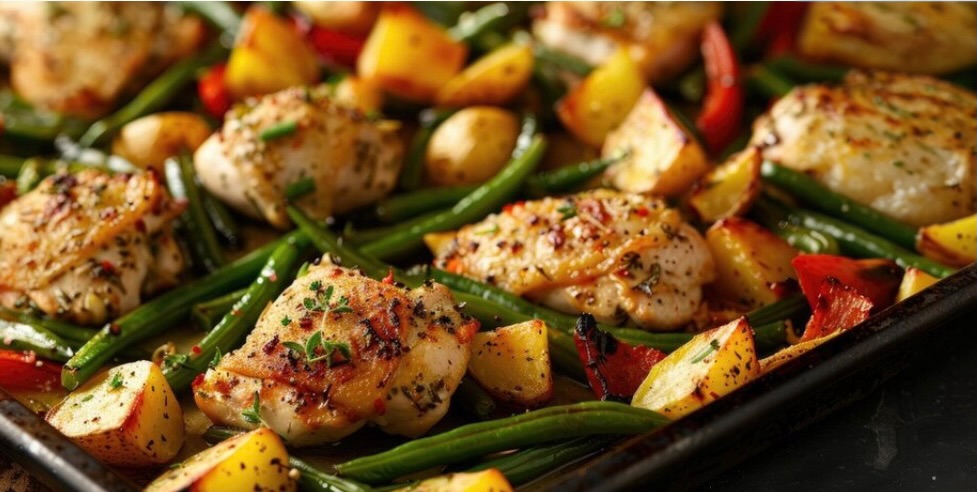
The days are getting shorter, and I think dinner prep should get shorter too. Easy sheet pan dinners are one of my favorite ways to get a real meal on the table without spending the whole night cooking or cleaning up. Everything goes on one pan, the oven does most of the work, and you can make everything from chicken and vegetables to steak and fries. I pulled together some of my favorite easy sheet pan recipes, including a few old-fashioned favorites that remind me of the recipes we grew up eating.
Why Sheet Pan Dinners Work So Well
Sheet pan dinners may feel like a modern answer to busy weeknights, but cooking an entire meal together in the oven certainly isn’t new. Home cooks have been roasting meat, potatoes and vegetables together for generations. What changed was the pan. The rimmed baking sheets that became standard equipment in commercial kitchens eventually became everyday tools in home kitchens, and somewhere along the way we figured out they were good for a lot more than cookies.
The sheet pan dinner as we know it today really took off as home cooks started looking for easier one-pan meals with less prep and even less cleanup. Instead of using a skillet for the meat, a saucepan for the vegetables and another pot for the potatoes, everything could go into the oven together. It’s one of those cooking ideas that seems almost too obvious once you start doing it.
And that’s probably why I love sheet pan dinners so much. They aren’t fussy. You can make chicken and vegetables, sausage and potatoes, salmon, steak and fries or use up whatever vegetables happen to be sitting in the refrigerator. Most of the time, the oven does the majority of the work while you do something else.
For me, the best sheet pan meals are the ones that feel like real dinner. I want something familiar and filling, not a complicated recipe with 25 ingredients I have to buy specifically for one meal. That’s what these recipes are about: easy dinners, familiar ingredients and fewer dishes when dinner is over.
Sheet Pan Basics: A Few Things to Know Before You Start
You don’t need any special equipment to make a good sheet pan dinner, but there are a few general rules that make a big difference.
Use a large rimmed baking sheet. A standard half-sheet pan is approximately 13 by 18 inches and gives your food enough room to roast. The rim keeps juices and ingredients from running off the sides.
Give everything some room. This is probably the biggest sheet pan rule. If you crowd the pan, your food tends to steam instead of roast. A little space between ingredients helps vegetables brown and gives meat that roasted exterior you’re looking for. If everything is piled on top of everything else, use two pans.
Cut ingredients with cooking time in mind. Potatoes and other firm vegetables generally take longer than something tender like zucchini or green beans. Cut slower-cooking vegetables into smaller pieces, or give them a head start in the oven before adding ingredients that cook quickly.
Try to keep pieces about the same size. You don’t need to get out a ruler, but similar-sized pieces tend to finish cooking at about the same time. That means fewer potatoes that are still hard while the smaller pieces are already overdone.
A little oil goes a long way. You want enough oil to lightly coat the ingredients so they roast and brown, but you don’t want everything swimming in it. Tossing the ingredients before spreading them onto the pan usually gives you more even coverage.
Season the whole pan. Salt and pepper are the starting point, but garlic powder, onion powder, Italian seasoning, smoked paprika and dried herbs can completely change a basic sheet pan dinner. This is also a great place to use seasoning blends you already have in the pantry.
Pay attention to temperature. Many sheet pan dinners cook well in a fairly hot oven because higher heat helps roast and brown the food instead of slowly steaming it. But every recipe is different, so follow the temperature and cooking time listed for the individual recipe rather than assuming every sheet pan meal should cook the same way.
Line the pan when it makes sense. Parchment paper can make cleanup easier, especially with sticky marinades and sauces. Foil can also be useful for messy recipes. There are times when cooking directly on the pan gives you better browning, so lining the pan isn’t an absolute rule.
Check meat by temperature, not appearance. Cooking times are estimates because ovens, pans and the size of the food can vary. A food thermometer is the easiest way to know when meat and poultry have reached a safe internal temperature.
Don’t be afraid to move things around. If the potatoes need another ten minutes but the green beans are finished, take the green beans off. If one side of your oven browns faster, rotate the pan. Sheet pan cooking is supposed to make dinner easier, not turn into another set of rigid rules.
Once you understand those basics, you can turn an amazing number of dinners into sheet pan meals. And this time of year, when the days start getting shorter and nobody wants to spend the entire evening standing over the stove, that sounds pretty good to me.
Now let’s get to the recipes.
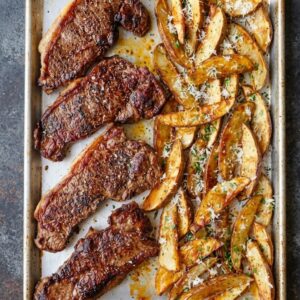
Easy Sheet Pan Steak and French Fries
Steak and French fries sounds like the kind of dinner that should involve several pans and a mess all over the kitchen. It doesn’t have to. This is one of my favorite examples of why sheet pan dinners work so well: you can take something that feels like a restaurant dinner and make it considerably easier at home.
The trick is giving the potatoes a head start. They take longer to cook than the steak, so they go into the oven first. Once they’ve started to brown and crisp, the steak joins them for the final stretch. You end up with steak and hot, crispy fries without standing over two different pans.
This is also an easy dinner to change depending on what you have. Add a green vegetable to the pan, serve it with a simple salad, or keep it exactly as it is. Steak and potatoes have been showing up together on dinner tables forever, and there’s a reason for that.
Ingredients
1 pound baby potatoes or small Yukon Gold potatoes, cut into thin wedges
2 tablespoons olive oil
Salt and black pepper, to taste
1 teaspoon garlic powder
1 teaspoon smoked paprika
2 steaks, approximately 1 inch thick
1 tablespoon butter, softened
1 clove garlic, minced
Fresh parsley, optional
Directions
- Preheat the oven to 425°F. Place a large rimmed sheet pan in the oven while it preheats. Starting with a hot pan helps the potatoes begin browning as soon as they hit the surface.
- Toss the potato wedges with 1 tablespoon of the olive oil, garlic powder, smoked paprika, salt and pepper. Carefully spread them onto the hot sheet pan in a single layer.
- Roast the potatoes for about 20 minutes, then turn them so they can brown on the other side.
- While the potatoes are cooking, pat the steaks dry. Rub them with the remaining olive oil and season generously with salt and pepper.
- Move the potatoes toward the sides of the sheet pan and place the steaks in the center. Return the pan to the oven and cook until the steaks reach your preferred doneness. The exact time will depend on the thickness of the steaks and how you like them cooked, so use an instant-read thermometer rather than relying only on the clock.
- Mix the softened butter with the minced garlic. When the steaks come out of the oven, add a little garlic butter to the top of each steak and allow them to rest for 5 to 10 minutes before slicing.
- Check the potatoes. If you want them a little crispier, remove the steaks to rest and return the potatoes to the oven for a few more minutes.
Shannon’s Shortcut
If cutting potatoes isn’t happening tonight, use frozen steak fries. That’s what shortcuts are for. Start them according to the package directions and add the steak to the sheet pan toward the end of their cooking time. Just make sure you leave enough room around everything so the fries can actually crisp instead of steam.
What Temperature Should Steak Be?
The USDA recommends cooking whole cuts of beef to a minimum internal temperature of 145°F followed by at least a three-minute rest. If you prefer steak cooked differently, use a reliable instant-read thermometer and follow current food-safety guidance.
And that’s dinner. One pan, steak and fries, and considerably less cleanup than you’d expect from a meal like this.
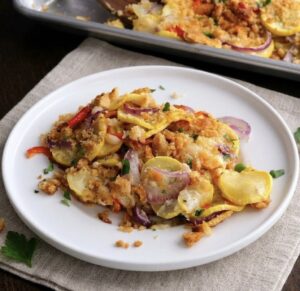
Old-Fashioned Sheet Pan Squash Casserole
If you’ve still got a few yellow squash hanging on in the garden, this is what I’d make with them.
Squash casserole is one of those old-fashioned recipes that immediately reminds me of church suppers, potlucks and family tables. It’s simple, familiar food: tender yellow squash, cheese and that buttery cracker topping that somehow makes the whole thing.
This sheet pan version keeps everything I like about the classic casserole but spreads it out so you get more of that golden topping in every serving. And if somebody in your house claims they don’t like squash, cheese and buttery Ritz crackers certainly don’t hurt the argument.
It’s technically a side dish, but it’s also exactly the kind of recipe I want in a sheet pan collection because you can put it in the middle of the table and let everybody dig in.
Ingredients
2¾ pounds yellow squash, about 9
½ teaspoon salt
2 teaspoons Cajun seasoning
1 teaspoon garlic powder
1 cup shredded white cheddar cheese
1 cup shredded Parmesan cheese
1 small red onion, thinly sliced
5 mini sweet peppers, sliced
¼ cup melted butter, divided
1 cup crushed Ritz crackers
Directions
- Preheat the oven to 400°F. Spray a half-sheet pan with nonstick cooking spray.
- Slice the squash and place it on paper towels. Sprinkle the squash with ¼ teaspoon of the salt and let it sit for 15 minutes, then pat it dry.
- Arrange half of the squash slices on the pan and top with sliced onion and sweet peppers. Sprinkle with half of the Cajun seasoning and garlic powder and top with half of the shredded cheese. Repeat the layers. Drizzle with 1 tablespoon of the melted butter.
- Stir together the remaining melted butter and crushed Ritz crackers. Spread the cracker crumbs over the top of the squash mixture.
- Bake for 25 minutes or until the vegetables are tender and the crackers are golden brown. Garnish with fresh parsley if you have some.
Shannon’s Shortcut
This is an easy, crowd-pleasing side dish that feels a little special without very much work. The Cajun seasoning, two cheeses and buttery Ritz topping make simple squash absolutely delicious. It’s also a great way to use up summer squash and goes with just about any meal.
One Important Trick for Squash Casserole
Don’t skip the step where you salt the sliced squash and let it sit before patting it dry. Yellow squash contains a lot of water, and getting some of that moisture out before it goes onto the sheet pan helps keep the finished casserole from becoming watery.
That little step makes a big difference, especially when you’re spreading squash across a sheet pan instead of baking it in a deep casserole dish.
And if this recipe brings back memories of the squash casseroles that showed up at potlucks, family reunions and church suppers, that’s exactly why I wanted it here. Some recipes don’t need reinventing. Sometimes they just need an easier way to make them.
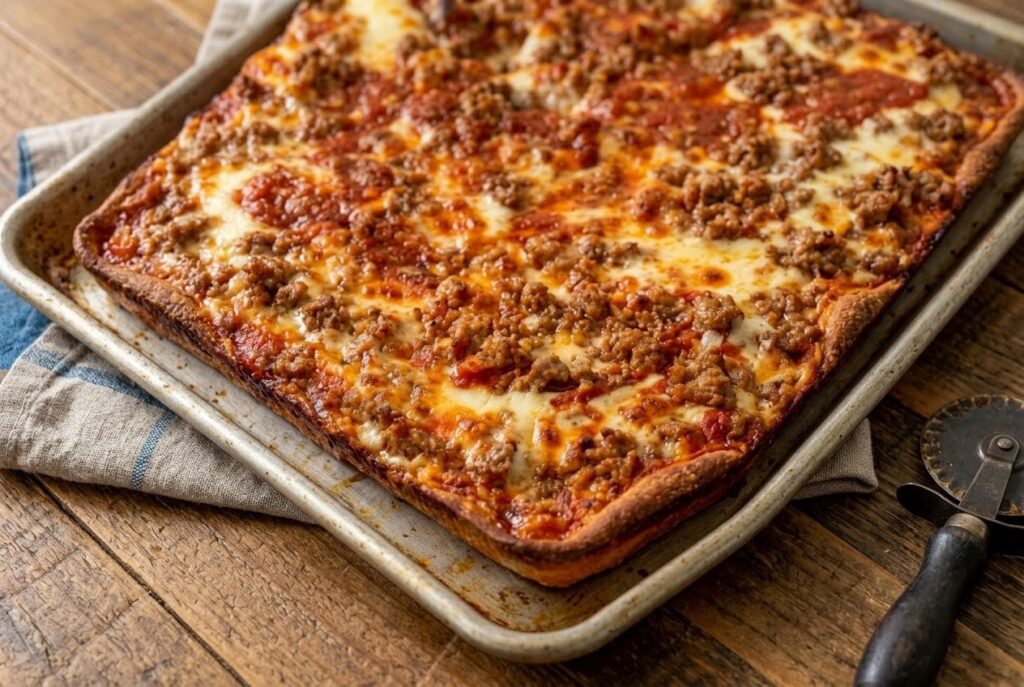
Vintage 1970s Mom’s Sheet Pan Pizza
This one really is vintage. It’s the pizza my mom made when we were growing up, and if you grew up in the 1970s or 1980s, there’s a good chance something about it will look familiar.
My mom always made hers with browned hamburger. Maybe that’s a Minnesota thing, but hamburger pizza was what I remember growing up with. Pillsbury refrigerated pizza dough, pizza sauce, hamburger and plenty of cheese. Nothing fancy. It was the kind of dinner that brought everybody into the kitchen, and it’s still one of those recipes that tastes like home.
Long before “sheet pan dinners” became a search term, moms were already figuring out how useful a big baking sheet could be for feeding a family. Homemade sheet pan pizza was inexpensive, easy to customize and could feed everybody without ordering several pizzas. This is exactly the kind of recipe I mean when I talk about easy recipes worth remembering.
And there’s another reason I included it here: pizza night doesn’t have to mean takeout. Refrigerated dough does most of the work, and because everything bakes on one sheet pan, cleanup is pretty painless too.
Ingredients
1 can (13.8 ounces) Pillsbury refrigerated pizza crust
1 pound ground beef
1 cup pizza sauce
2 cups shredded mozzarella cheese
Pepperoni slices, optional
½ teaspoon Italian seasoning, optional
Directions
- Preheat the oven to 425°F. Lightly grease a large sheet pan.
- Unroll the pizza dough onto the sheet pan and press it into a large rectangle. Prick the dough all over with a fork.
- Bake the crust for 7–9 minutes, just until it begins to set and lightly brown.
- While the crust bakes, brown the ground beef in a skillet over medium-high heat. Drain well.
- Spread the pizza sauce over the partially baked crust. Top with the browned hamburger and mozzarella cheese. Add pepperoni if desired.
- Return the pizza to the oven and bake for 10–12 minutes, or until the crust is golden and the cheese is melted and bubbly.
Shannon’s Shortcut
This is the pizza my mom made when we were growing up. She always made it with browned hamburger, but you can certainly add pepperoni if that’s what your family likes. Pillsbury pizza dough, sauce, meat and cheese. Nothing fancy, and that’s exactly the point.
Make It Your Family’s Pizza
The other great thing about an old-fashioned sheet pan pizza is that there really aren’t many rules once you have the basic method down. If half the family wants hamburger and the other half wants pepperoni, divide the pan. Add mushrooms, onions, peppers or whatever your family actually likes.
And don’t feel like you need to turn pizza night into a project. The whole point of using refrigerated dough is that somebody else already did that part for you.
That’s what I like about all three of these recipes. Steak and fries gives you an easy weeknight dinner that feels like more work than it is. The squash casserole takes an old-fashioned favorite and makes it sheet-pan friendly. And Mom’s pizza is proof that some of the easiest dinner ideas aren’t new at all.
Want More Easy Sheet Pan Recipes?
These are only three of the recipes in my Sheet Pan Favorites collection. I put together more of my favorite easy sheet pan dinners and sides, along with my Sheet Pan Shortcut Guide to make dinner and cleanup even easier.
And I added one recipe that has absolutely nothing to do with a sheet pan.
Get the Complete Sheet Pan Favorites Collection
Want more easy sheet pan recipes? I put the rest of my favorites together in one easy download, including more dinners, sides, my Sheet Pan Shortcut Guide and a bonus 3 Ingredient Croissant Bread Pudding recipe.
GET THE SHEET PAN FAVORITES DOWNLOAD
Join the party for exclusive giveaways and never miss out on any of the fun. Share your email and join the family!